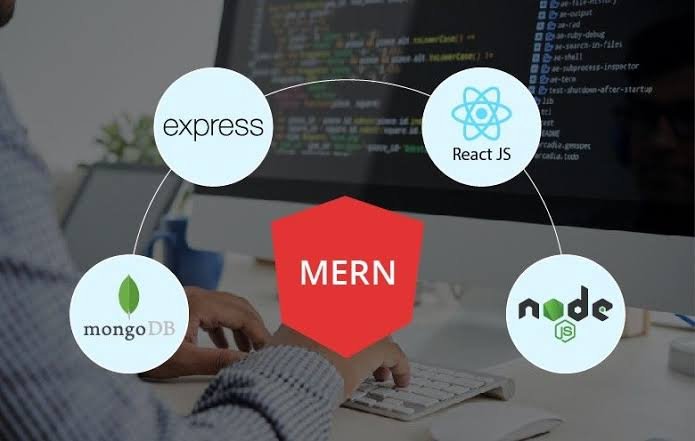
Every startup founder faces the same early tension: build fast enough to test the market, but build well enough that the product does not fall apart the moment real users show up. Few technology choices solve that tension as cleanly as the MERN stack. Built on MongoDB, Express.js, React, and Node.js, MERN has become one of the most popular technology choices among product companies that need to move quickly without sacrificing long-term scalability. For founders trying to get from idea to working product in the shortest possible time, understanding why MERN works so well is the first step toward building smarter from day one.
One Language Across the Entire Stack
The single biggest advantage of the MERN stack is that it runs on JavaScript from the front end to the back end. React handles the user interface, Node.js and Express.js run the server and API layer, and MongoDB stores the data, all using the same core language. This might sound like a small detail, but for a startup it changes everything about how a team operates.
When founders hire MERN stack developers, they are hiring people who can move between the front end and the back end without constantly switching languages or mental models. A single developer can build a feature end to end, from the database schema to the API endpoint to the interface the user actually sees. This collapses the traditional wall between frontend and backend teams, which matters enormously for early-stage companies that cannot afford to run two separate specialized teams for every feature.
This is also why so many product companies choose to hire MERN stack developers instead of assembling a patchwork of specialists in different languages. A smaller, more versatile team can ship features faster, debug issues more efficiently, and avoid the communication overhead that comes from juggling multiple technology silos.
Built for Speed Without Cutting Corners
Startups live and die by how quickly they can test ideas in the market. The MERN stack is built for exactly this kind of rapid iteration. React’s component-based architecture means developers can reuse pieces of the interface across different parts of an application, cutting development time significantly. Node.js runs on a non-blocking, event-driven architecture, which means it can handle many simultaneous connections without slowing down, a critical feature for any product expecting sudden spikes in user traffic.
MongoDB adds to this speed advantage by using a flexible, document-based data structure instead of rigid rows and columns. Early-stage products change their data models constantly as founders learn what customers actually want. MongoDB lets teams adjust their database structure without the painful migrations that traditional relational databases often require. For a startup pivoting its product based on user feedback, this flexibility can save weeks of engineering time.
Together, these pieces let founders take an idea from concept to functioning prototype in a fraction of the time it would take with a more fragmented technology stack. This is precisely why so many companies choose to hire MERN stack developers when they are racing to hit a launch date or validate a new feature before a funding round.
Scalability That Grows With the Business
Speed alone would not make MERN a favorite among serious product companies if it could not scale. Fortunately, every layer of the stack is designed with growth in mind. Node.js is used by some of the largest platforms in the world precisely because it handles high volumes of concurrent requests efficiently. React’s virtual DOM keeps user interfaces fast even as applications grow more complex, and its massive ecosystem of libraries means teams rarely need to build common functionality from scratch.
MongoDB’s architecture supports horizontal scaling, meaning a growing startup can distribute its data across multiple servers as user numbers climb, rather than being boxed in by the limits of a single powerful machine. This matters because many startups do not know in their first year whether they will have a thousand users or a million. A stack that can handle both scenarios without a complete rebuild removes one of the biggest risks a young company faces.
This is a major reason founders continue to hire MERN stack developers even as their companies mature past the earliest startup phase. The stack does not need to be replaced as the company grows. Instead, the same core architecture that powered the minimum viable product can scale into the infrastructure supporting a company with millions of users, as long as the team building it understands how to structure the application properly from the start.
Cost Efficiency and Talent Availability
For founders watching every dollar of runway, cost efficiency matters as much as technical performance. Because MERN relies entirely on JavaScript, startups do not need to maintain separate hiring pipelines for frontend and backend specialists. This alone reduces payroll overhead and shortens the time it takes to build a functioning engineering team.
JavaScript is also one of the most widely used programming languages in the world, which means the talent network for MERN developers is large and constantly growing. Startups do not have to compete for a narrow set of specialists in an obscure language. This gives founders more flexibility when they decide to hire MERN stack developers, whether they are building an in-house team, working with freelancers, or partnering with a development agency to move faster during a critical growth phase.
Open-source tooling is another quiet advantage. Every component of the MERN stack is free to use, backed by large developer communities that constantly produce documentation, plugins, and pre-built solutions to common problems. This lowers both the financial cost and the technical risk of building a new product, which is exactly what early-stage founders need.
The Bottom Line for Founders
The MERN stack has earned its popularity among startups because it solves the problems founders actually face: limited time, limited budget, and an uncertain future that could require the product to scale overnight. It lets a lean team move fast without building on a foundation that will need to be torn down later.
For any founder or product leader deciding how to build their next application, the case for MERN is straightforward. It offers speed during the earliest and most uncertain phase of a company’s life, and it offers the scalability needed to support real growth later. That combination is precisely why so many successful startups choose to hire MERN stack developers as one of their first and most important technical decisions.
About the Author