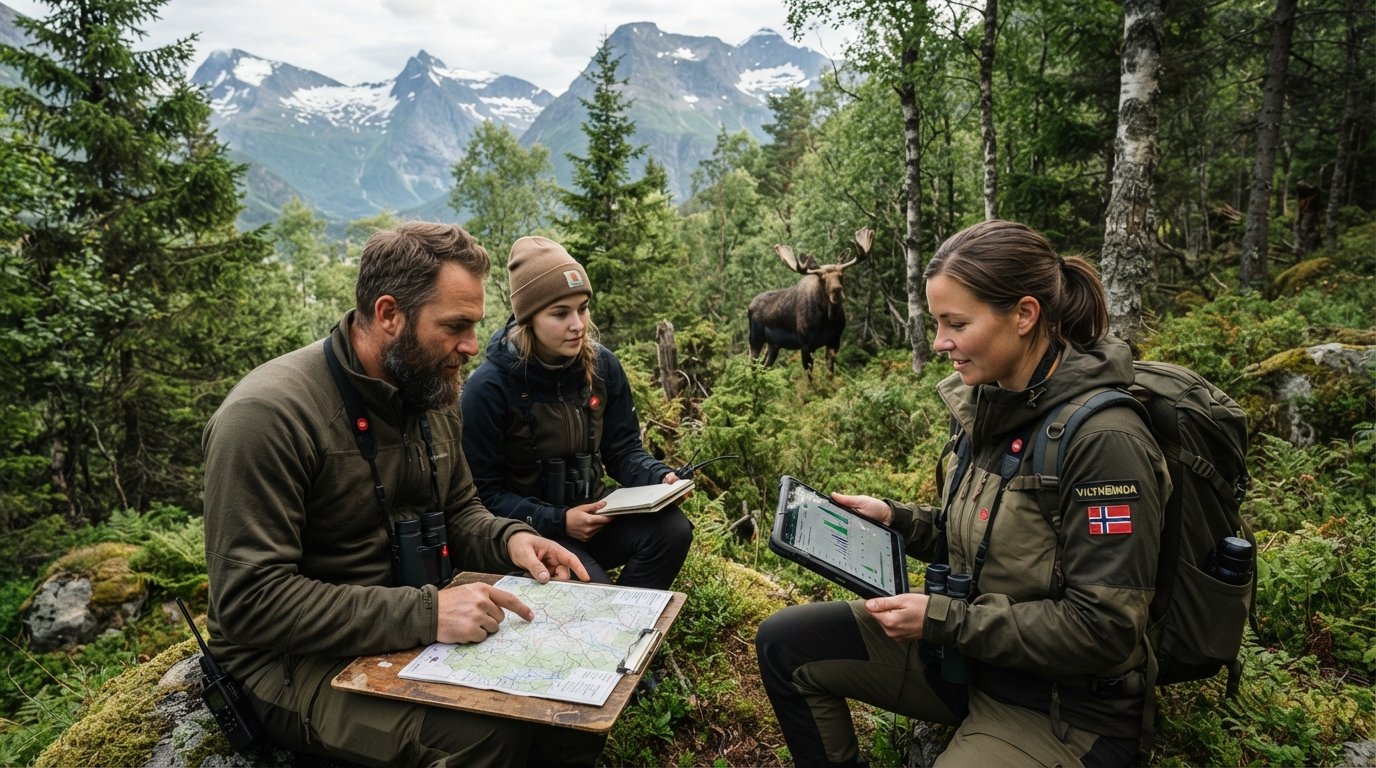
If you have come across the Norwegian word viltnemnda, you may be wondering what it means and what this body actually does.
In simple terms, viltnemnda refers to the local wildlife-management committee or arrangement responsible for helping manage wildlife-related matters at the municipal level in Norway. The exact organization can differ between municipalities.
Its work can involve hunting and wildlife management, injured or dead wild animals, wildlife conflicts, and follow-up after vehicle-animal collisions. For anyone unfamiliar with Norway’s local government system, however, the term can be confusing.
This guide explains what viltnemnda means, how it fits into Norwegian wildlife management, what happens after an animal collision, and how the system has changed under Norway’s new wildlife legislation.
What Does Viltnemnda Mean?
Viltnemnda is the definite form of the Norwegian term viltnemnd. The underlying term refers to a municipal committee involved in wildlife management.
In English, it can be understood broadly as a wildlife committee or municipal wildlife-management body.
One important distinction is that Viltnemnda should not automatically be treated as one single nationwide government agency. Wildlife administration is connected to the municipal level, and municipalities can organize these responsibilities in different ways.
That means the exact name, structure, and practical responsibilities you encounter may depend on the municipality involved.
What Does Viltnemnda Do?
The general purpose of local wildlife management is to help ensure that wild-animal populations and wildlife-related situations are handled according to Norwegian rules.
Depending on the local organization, responsibilities may include:
- Wildlife management and population considerations
- Hunting-related administration
- Handling fallen or injured wildlife
- Follow-up after wildlife-vehicle collisions
- Wildlife-related conflicts
- Cooperation with hunters, landowners, police, and other authorities
- Local implementation of national wildlife-management rules
The precise division of responsibilities is important because not every task is necessarily performed by the same committee or municipal employee.
How Does Viltnemnda Fit Into Norway’s Wildlife System?
Norway’s wildlife-management system operates across several levels.
The national government establishes laws and regulations governing wildlife, hunting, conservation, and related activities. Municipalities then have important responsibilities in local wildlife administration.
Other organizations may also become involved depending on the situation.
For example, after a vehicle hits an animal, the police can notify the wildlife committee and other relevant stakeholders. Statens vegvesen specifically directs drivers involved in an animal collision to report it to the police at 02800.
This illustrates an important point: Viltnemnda is part of a wider network rather than an isolated organization.
What Is the Difference Between Viltnemnda and the Municipality?
This is one of the easiest parts of the subject to misunderstand.
The municipality has formal responsibilities within local administration, while a wildlife committee or other local arrangement may carry out specific wildlife-management functions.
In other words, saying that “Viltnemnda manages all wildlife in Norway” is too broad.
A better way to understand the relationship is:
National rules → municipal responsibility → local wildlife administration → practical response to specific situations
The exact organizational structure can vary between municipalities.
How Has Wildlife Management in Norway Changed?
Norwegian wildlife administration has developed considerably over time.
Municipal involvement became an important part of wildlife management, and local authorities gained responsibilities connected with managing wildlife populations and hunting.
The legal framework has also evolved.
A particularly important change occurred in 2026.
What Changed With Norway’s New Wildlife Law in 2026?
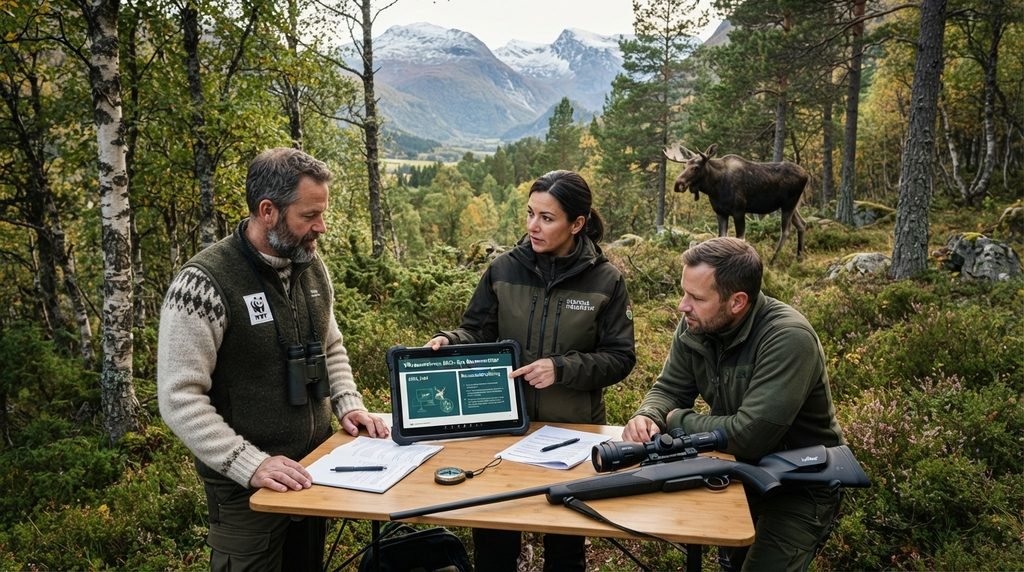
Norway’s Viltressursloven, formally the law concerning hunting, trapping, and the taking of wildlife, entered into force on July 1, 2026.
It replaced the previous Wildlife Act, known as Viltloven, which dated from 1981. The Norwegian government says the new law largely continues existing rules while restructuring and clarifying the regulatory framework for modern wildlife management.
The new legislation covers areas including:
- Hunting
- Trapping
- Taking wildlife
- Sustainable wildlife-resource management
- Animal welfare considerations
- Wildlife-management responsibilities
- Certain modern hunting technologies
The change is important when reading older information about Viltnemnda because articles written before July 2026 may refer to the former legal framework.
The new law also introduced or updated rules relating to subjects such as technological equipment and certain aspects of wildlife searching.
What Happens When Wildlife Is Injured?
Injured wildlife can require a coordinated response.
This is particularly important after a vehicle collision. An animal may run away from the road even though it has suffered serious injuries.
For that reason, drivers should not simply assume that an animal is unharmed because it disappears from view.
Statens vegvesen advises people involved in an animal collision to contact the police at 02800. The police then notify the wildlife committee and other relevant parties.
The location of the collision is also important because personnel may need to search the surrounding area.
What Should You Do After Hitting an Animal in Norway?
If you hit a wild animal while driving in Norway, the most important step is to report the collision.
Statens vegvesen states that while hitting an animal itself is not a punishable offence, failing to report the incident is. Drivers should call the police on 02800.
You should also:
- Stop and make the accident scene as safe as possible.
- Turn on your hazard warning lights.
- Use a warning triangle and reflective vest when appropriate.
- Give the police your location or coordinates if possible.
- Follow instructions from the police.
- If permitted to leave, clearly mark the collision location when safe to do so.
- Do not chase an injured animal.
Statens vegvesen specifically warns against pursuing an injured animal because doing so can be dangerous and can make subsequent searching more difficult for trained search dogs.
If people are injured in the accident, 113 is the emergency number for medical emergencies.
Should You Kill an Injured Animal Yourself?
Generally, you should not attempt to euthanize an injured animal yourself unless the police have approved it.
The reason is both animal welfare and safety. Competent personnel can assess the animal and determine whether it needs to be euthanized or whether another response is appropriate.
Statens vegvesen provides specific exceptions for certain small wild animals and birds when it is obvious they will not survive, but drivers should follow the official guidance applicable to their situation.
For larger wildlife, contacting the police is the appropriate starting point.
What Are Fallvilt and Ettersøk?
Two Norwegian terms are especially relevant when discussing wildlife incidents.
Fallvilt
Fallvilt generally refers to wildlife that has died or become incapacitated through circumstances other than ordinary hunting.
Road-killed animals are one example.
The handling of such wildlife can involve local authorities and other relevant personnel.
Ettersøk
Ettersøk refers to searching for an animal, particularly when an animal has been wounded and needs to be located.
After a collision or hunting incident, an injured animal may travel away from the original location. A systematic search can therefore be necessary.
This is one reason drivers should provide an accurate collision location instead of simply leaving without reporting it.
Does Viltnemnda Control Hunting?
Wildlife management and hunting are closely connected, but it would be misleading to say that Viltnemnda independently controls all hunting in Norway.
Hunting operates within a national legal and regulatory framework, while municipalities and other authorities have specific local responsibilities.
The new Viltressursloven establishes the modern legal framework for hunting, trapping, and taking wildlife in Norway. It requires wildlife-resource management to be conducted in a sustainable and responsible manner within the wider framework of Norwegian environmental and animal-welfare legislation.
Local authorities may therefore have important roles without being the sole authority over every aspect of hunting.
How Does Viltnemnda Help With Human-Wildlife Conflicts?
Wild animals can sometimes come into conflict with people, agriculture, roads, property, or other human activities.
Examples can include:
- Large animals near roads
- Wildlife entering populated areas
- Damage involving agricultural land
- Animals creating traffic hazards
- Injured animals near homes or public areas
- Conflicts involving domestic animals
The appropriate response depends on the species, location, circumstances, and applicable regulations.
This is another reason local wildlife administration matters: local authorities are closer to the specific conditions affecting their municipality.
Why Can Viltnemnda Look Different in Different Municipalities?
There is no reason to assume that every Norwegian municipality has an identical wildlife committee with exactly the same organization.
Municipal wildlife-management arrangements can differ.
One municipality may use a committee structure, while another may organize relevant responsibilities through another local administrative arrangement.
As a result, if you need help with a specific wildlife issue, searching for your municipality’s wildlife management or viltnemnd contact information is usually more useful than looking for one nationwide Viltnemnda office.
Why Is Local Wildlife Management Important?
Norway contains large areas of forests, mountains, farmland, roads, and settlements where humans and wildlife regularly interact.
Local knowledge can therefore be important when dealing with:
- Wildlife populations
- Hunting pressure
- Road safety
- Injured animals
- Habitat and land-use conflicts
- Local wildlife incidents
A national legal framework provides common rules, but local authorities deal with circumstances that can vary considerably from one part of Norway to another.
Frequently Asked Questions About Viltnemnda
1. What does Viltnemnda mean?
Viltnemnda is the definite Norwegian form related to viltnemnd, a term for a municipal wildlife-management committee or body. It is associated with local wildlife administration in Norway.
2. Is Viltnemnda a national government agency?
Not in the sense of one single nationwide agency with identical local offices. The term is connected to municipal wildlife management, and the exact organization can vary between municipalities.
3. What number should I call after hitting an animal in Norway?
Call the Norwegian police at 02800 to report a vehicle-animal collision. The police can notify the wildlife committee and other relevant parties.
If people are injured or there is a serious emergency requiring medical assistance, call 113.
4. Should I chase an injured animal?
No. Statens vegvesen advises against pursuing an injured animal because this can be dangerous and can interfere with an organized search.
5. Is Viltnemnda responsible for all wildlife in Norway?
No. Wildlife management involves national legislation, municipalities, and other authorities and stakeholders. The specific role of a local wildlife committee depends on the municipal organization and the situation.
Final Thoughts
Viltnemnda is best understood as part of Norway’s local wildlife-management system, rather than as one single nationwide agency. Its practical relevance can range from wildlife administration and hunting-related matters to injured animals and road collisions.
For anyone dealing with wildlife in Norway, understanding the local municipal structure is important. The 2026 introduction of Viltressursloven also makes current information especially important when researching Norwegian wildlife management.
Related Post
- Digitaledge.Org – Complete Guide to the Technology and Digital Media Website!
- Gimkit Host – How to Host a Live Game, Manage Players, and Troubleshoot Issues!
- Newslikeyou.Com – What It Is, What It Publishes, and What Readers Should Know!
About the Author