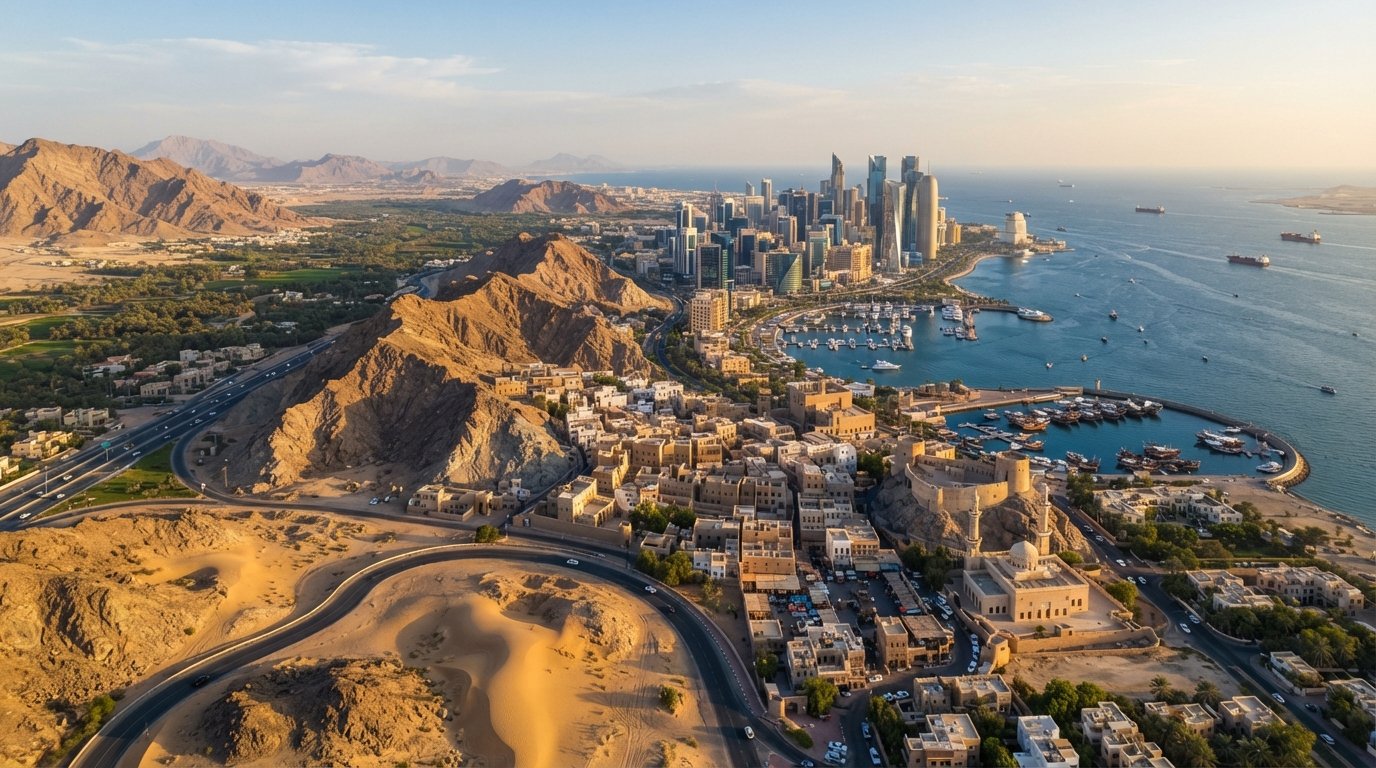
The Middle East is a geographic, cultural, and geopolitical region centered on Southwest Asia and extending in some definitions into North Africa. There is no single universally agreed list of Middle Eastern countries, which is why different sources may give slightly different numbers. National Geographic describes the Middle East as a region of southwest Asia and northeast Africa, while other reference sources use narrower or broader boundaries.
For a commonly used definition, the region includes countries such as Saudi Arabia, Iran, Iraq, Israel, Jordan, Lebanon, Syria, Türkiye, Egypt, and the Gulf states, along with other countries of the Arabian Peninsula.
How Many Countries Are in the Middle East?
A commonly used modern definition contains 17 countries, although the exact number depends on how the region is defined.
One widely used 17-country list includes:
- Bahrain
- Cyprus
- Egypt
- Iran
- Iraq
- Israel
- Jordan
- Kuwait
- Lebanon
- Oman
- Palestine
- Qatar
- Saudi Arabia
- Syria
- Türkiye
- United Arab Emirates
- Yemen
However, some geographical and political sources use broader definitions and may include additional countries or territories. The Congressional Research Service notes that there is no standard definition for the broader MENA region, demonstrating why country lists can vary.
So, rather than treating one number as absolute, it is better to identify which definition is being used.
List of Middle Eastern Countries
| Country | Capital | Common regional association |
|---|---|---|
| Bahrain | Manama | Gulf |
| Cyprus | Nicosia | Eastern Mediterranean |
| Egypt | Cairo | North Africa / Middle East |
| Iran | Tehran | Western Asia |
| Iraq | Baghdad | Mesopotamia |
| Israel | Jerusalem | Levant |
| Jordan | Amman | Levant |
| Kuwait | Kuwait City | Gulf |
| Lebanon | Beirut | Levant |
| Oman | Muscat | Arabian Peninsula / Gulf |
| Palestine | — | Levant |
| Qatar | Doha | Gulf |
| Saudi Arabia | Riyadh | Arabian Peninsula |
| Syria | Damascus | Levant |
| Türkiye | Ankara | Anatolia / transcontinental |
| United Arab Emirates | Abu Dhabi | Gulf |
| Yemen | Sana’a | Arabian Peninsula |
The classification of Palestine, territories, and some transcontinental or culturally connected areas can differ between sources, so country tables should be read in the context of the definition being used.
Middle East Countries by Subregion
The Middle East is easier to understand when its countries are considered in geographical groups.
Arabian Peninsula
The Arabian Peninsula contains:
- Saudi Arabia
- Yemen
- Oman
- United Arab Emirates
- Qatar
- Bahrain
- Kuwait
Saudi Arabia occupies most of the peninsula, while the smaller Gulf states are concentrated around the Persian Gulf.
Levant
The Levant generally refers to the eastern Mediterranean area.
Countries and territories commonly associated with the Levant include:
- Israel
- Palestine
- Jordan
- Lebanon
- Syria
The term is historical and geographic rather than a formal political organization.
Mesopotamia
Mesopotamia refers historically to the land between the Tigris and Euphrates rivers.
Modern Iraq occupies much of this historic region, although parts of neighboring countries are also connected with ancient Mesopotamia.
Iran
Iran is generally treated as part of the Middle East and is geographically located in Western Asia.
It is distinct from the Arab countries of the region because the majority population is Persian and its primary language is Persian.
Türkiye
Türkiye occupies territory in both Europe and Asia and is commonly included in many Middle East discussions because of its geography, history, politics, and connections with the eastern Mediterranean.
Egypt
Egypt is geographically an African country, but it is commonly included in discussions of the Middle East because of its history, politics, culture, population, and strategic position.
National Geographic’s educational material also places Egypt within Middle Eastern geographical discussions.
Middle Eastern Countries and Their Capitals
For quick reference:
- Bahrain — Manama
- Cyprus — Nicosia
- Egypt — Cairo
- Iran — Tehran
- Iraq — Baghdad
- Israel — Jerusalem
- Jordan — Amman
- Kuwait — Kuwait City
- Lebanon — Beirut
- Oman — Muscat
- Qatar — Doha
- Saudi Arabia — Riyadh
- Syria — Damascus
- Türkiye — Ankara
- United Arab Emirates — Abu Dhabi
- Yemen — Sana’a
Palestine is commonly represented separately in regional lists, but its political status and terminology require more careful treatment than simply assigning it a conventional country-capital pair.
Why Do Different Sources List Different Middle East Countries?
The reason is simple: the Middle East is not a continent with universally agreed borders.
It is a regional concept whose boundaries have been shaped by geography, history, politics, culture, and international usage.
For example, some lists focus primarily on Southwest Asia and the Arabian Peninsula. Others extend the region to include Egypt or other areas of North Africa.
Wikipedia’s current Middle East reference explicitly separates a common definition from other definitions, illustrating this issue.
This is why you may see lists containing 16, 17, 18, or even more countries and territories.
Is Palestine a Middle Eastern Country?
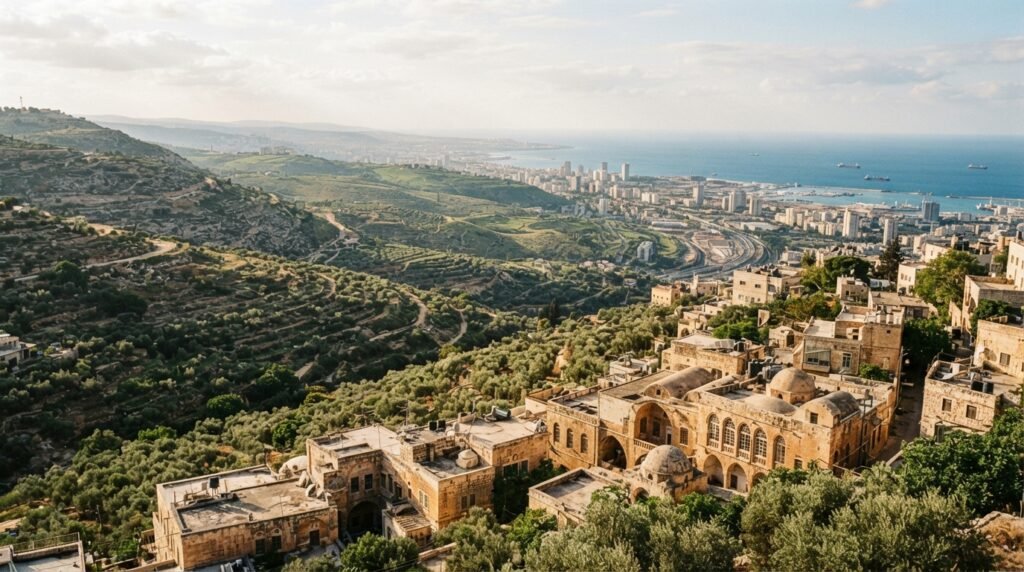
Yes, Palestine is commonly included in geographical descriptions of the Middle East and is generally associated with the Levant.
However, the terminology used for Palestine can differ according to the source, political context, and whether a list is counting sovereign states, territories, or other political entities.
For that reason, a careful geography article should distinguish regional inclusion from questions of international political status.
Is Türkiye Part of the Middle East?
Türkiye is frequently included in broader definitions of the Middle East, although its classification is not identical across every geographic framework.
Türkiye is a transcontinental country, with territory in both Europe and Asia. National Geographic’s map policy assigns Türkiye to Asia for continental classification while recognizing the country’s transcontinental geography.
Its historical and political relationships with the Balkans, Europe, the Caucasus, Central Asia, and the Middle East make its regional classification context-dependent.
Is Egypt Part of the Middle East?
Egypt is geographically located primarily in North Africa, but it is commonly considered part of the Middle East in political, cultural, historical, and geopolitical contexts.
Its Sinai Peninsula is geographically in Asia, while the majority of Egypt lies in Africa.
This makes Egypt one of the clearest examples of why regional classifications cannot always be reduced to continental boundaries.
Is Pakistan a Middle Eastern Country?
Pakistan is generally classified as part of South Asia, not the Middle East.
However, Pakistan has extensive historical, cultural, religious, economic, and political connections with Middle Eastern countries.
This distinction is important because cultural connections do not necessarily determine geographic classification.
Is Afghanistan a Middle Eastern Country?
Afghanistan is generally classified as part of South or Central Asia, rather than the core Middle East.
Some broader historical or geopolitical definitions may include Afghanistan when discussing an expanded Middle Eastern region, but it is not normally part of the standard core list.
Middle East vs. MENA
The terms Middle East and MENA are related but not identical.
MENA means Middle East and North Africa.
It is often used in economics, international development, business, and political analysis.
A MENA classification can therefore include North African countries such as:
- Algeria
- Egypt
- Libya
- Morocco
- Tunisia
and various Middle Eastern countries.
There is also no single universal MENA country list. The Congressional Research Service notes that organizations can use different definitions for the region.
Middle East vs. Gulf Countries
The Gulf countries are not the same thing as all Middle Eastern countries.
In modern political and economic usage, “Gulf countries” often refers to the six members of the Gulf Cooperation Council (GCC):
- Bahrain
- Kuwait
- Oman
- Qatar
- Saudi Arabia
- United Arab Emirates
The wider Middle East includes many additional countries, including Iran, Iraq, Jordan, Lebanon, Syria, Egypt, Israel, Yemen, and others.
So:
Every GCC member is generally considered Middle Eastern, but not every Middle Eastern country is a GCC member.
What Makes the Middle East Geographically Important?
The Middle East occupies a strategically important position between Europe, Asia, and Africa.
The region contains important waterways and transport corridors, including the:
- Persian Gulf
- Strait of Hormuz
- Red Sea
- Suez Canal
- Eastern Mediterranean
The Persian Gulf is especially important to global energy markets. National Geographic notes that the gulf borders Iran, Oman, the UAE, Saudi Arabia, Qatar, Bahrain, Kuwait, and Iraq.
Culture and Languages in the Middle East
The Middle East is culturally diverse and should not be treated as a single cultural or ethnic group.
Major communities include:
- Arabs
- Persians
- Turks
- Kurds
- Jews
- Armenians
- Assyrians
- and many other ethnic communities
Arabic is widely spoken across much of the region, while Persian, Turkish, Hebrew, Kurdish, and other languages are also important.
The region is also historically associated with the development and spread of Judaism, Christianity, and Islam. National Geographic identifies the Middle East as a region where three major world religions originated.
Economy of the Middle East
The region has some of the world’s most important energy-producing economies, particularly around the Gulf.
Oil and natural gas have played major roles in countries such as:
- Saudi Arabia
- Iran
- Iraq
- Kuwait
- Qatar
- United Arab Emirates
At the same time, several Middle Eastern economies have increasingly invested in sectors such as:
- Tourism
- Technology
- Finance
- Logistics
- Manufacturing
- Renewable energy
- Real estate
This means the region’s economy is much broader than petroleum alone.
Why Is the Middle East Important to the World?
The Middle East has global importance because of its combination of:
- Strategic location
- Energy resources
- Major trade routes
- Religious significance
- Historic civilizations
- Large population centers
- International political influence
- Maritime routes
Its position between three major continental regions also makes it an important crossroads for trade and international relations.
Frequently Asked Questions About Middle Eastern Countries
1. How many countries are in the Middle East?
A commonly used list contains 17 countries, but the number can vary depending on the definition used.
2. What are the main countries in the Middle East?
Commonly included countries include Saudi Arabia, Iran, Iraq, Israel, Jordan, Lebanon, Syria, Türkiye, Egypt, Yemen, Oman, Qatar, Bahrain, Kuwait, and the UAE, along with Palestine and Cyprus in broader/common lists.
3. Is Dubai a country in the Middle East?
No. Dubai is a city and emirate within the United Arab Emirates (UAE). The UAE is the country.
4. Is Saudi Arabia in the Middle East?
Yes. Saudi Arabia is one of the central countries of the Middle East and occupies most of the Arabian Peninsula.
5. Is Iran in the Middle East?
Yes. Iran is generally considered one of the major Middle Eastern countries.
6. Is Egypt in the Middle East?
Yes, in many political and cultural definitions, although Egypt is geographically located primarily in North Africa.
7. Is Pakistan in the Middle East?
Pakistan is generally classified as a South Asian country, although it has strong connections with the Middle East.
8. Are all Middle Eastern countries Arab countries?
No. The Middle East includes non-Arab countries such as Iran, Türkiye, and Israel, as well as diverse ethnic and linguistic communities.
9. Are Gulf countries the same as Middle Eastern countries?
No. The six GCC members form an important sub-group within the wider Middle East.
Final Takeaway
The phrase “countries in the Middle East” does not have one perfectly fixed answer because the Middle East is a regional and geopolitical concept rather than a continent with universally defined borders. A commonly used list contains 17 countries, but broader definitions can add other countries or territories.
For someone simply looking for the core list, the most commonly discussed countries include Saudi Arabia, Iran, Iraq, Israel, Jordan, Lebanon, Syria, Türkiye, Egypt, Yemen, Oman, Qatar, Bahrain, Kuwait, the UAE, Palestine, and Cyprus. The most important point is to state the definition being used instead of presenting a disputed country count as an absolute fact. That approach makes the information more accurate, useful, and durable for students, travelers, researchers, and anyone trying to understand the geography of the Middle East.
Related Post
- Fintechzoom .Com – What It Is, Markets, Features, and What You Should Know!
- Seo Agency In Usa Glorvix – Services, Evaluation, and What Businesses Should Know!
- Startup Booted – What Does It Mean? Causes, Examples, and How to Understand It!
About the Author