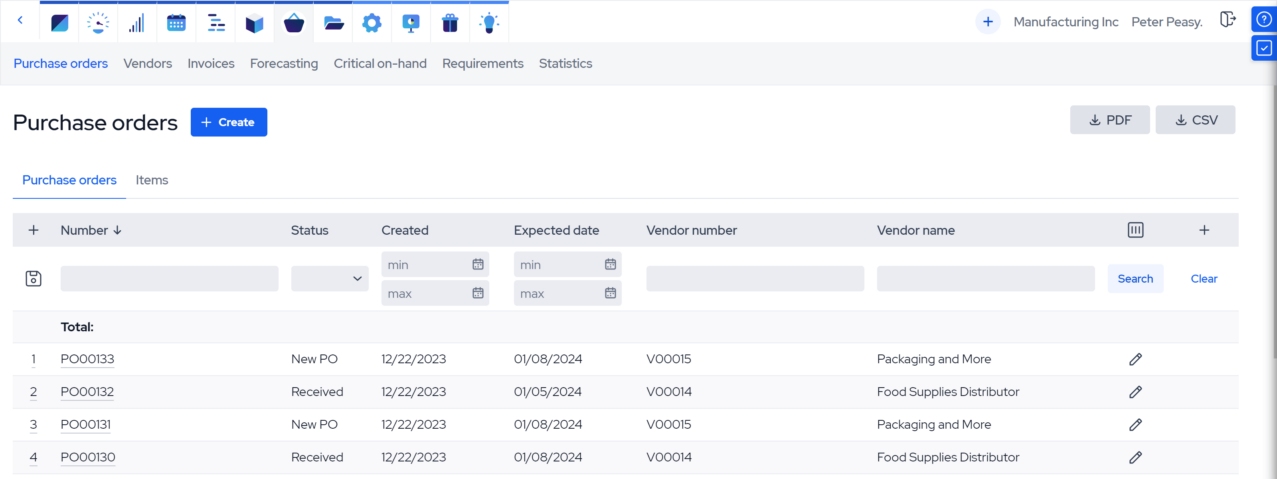
A controller at a 600-person injection moulding business once showed me a purchase order that had cost her company about £14,000. Not because of the price on it. The part was a bearing assembly worth roughly £900. The problem was that the PO sat in an inbox for nine days while the buyer who raised it was on holiday, nobody else could see it, and by the time it was approved the lead time had slipped past the production window. They air-freighted the replacement. Then they ran a second line short for a shift anyway.
She did not need a better bearing supplier. She needed to know that a request existed, who was sitting on it, and what happened to it next. That is the whole job of procurement software, and it is worth saying plainly because a lot of the marketing in this category talks about transformation when what buyers actually want is visibility and a working approval chain.
Mid-market manufacturers, roughly 200 to 2,000 employees, sit in an awkward spot. You are too big for a shared spreadsheet and a WhatsApp group. You are usually too small to fund the two-year implementation that enterprise suites assume. And unlike a software company or an agency, you buy two very different things: direct materials tied to a bill of materials and a production schedule, and indirect spend that is messier and often larger than anyone expects.
I have spent time inside enough of these rollouts to have opinions. Here are nine platforms worth a shortlist, what each one is genuinely good at, and the failure mode I would watch for.
What I weighted, and why
Every listicle in this category grades on features. Features are the easy part. These are the things that decided whether an implementation stuck:
- Does it handle direct and indirect spend in one place? Splitting them across two systems is how you end up with two versions of your supplier list.
- How hard is the ERP integration, really? If your ERP is on-premise and ten years old, “we integrate with everything” needs a follow-up question.
- Can a shop-floor supervisor raise a request without training? If not, they will phone the buyer, and you are back where you started.
- Does three-way matching actually run? PO to goods receipt to invoice. If the receipt step depends on someone remembering to tick a box, it will not hold.
- What does supplier onboarding look like? Manufacturing supply chains carry compliance weight. Standards like ISO 20400 set out how sustainability considerations fold into purchasing decisions, and increasingly customers ask you to evidence it.
1. Coupa — best if you already run a full ERP and have a procurement team to match
Coupa is the platform most people in this category name first, and for good reason. The spend analytics are deep, the supplier network is large, and if you have a genuine category management function it will use what Coupa gives it.
The catch is proportionality. Coupa assumes an organisation that can staff the configuration and keep staffing it. I have watched a 700-person manufacturer buy Coupa, get through the sourcing module, and quietly never turn on half of what they paid for because the person who understood it left. If you have a CPO and at least a few dedicated buyers, this is a strong choice. If procurement is one person who also handles logistics, look further down this list.
Watch for: implementation timelines quoted in months that behave like quarters, and pricing that scales with spend under management rather than seats.
2. Zapro — best for manufacturers who want AI across buying and paying, without an enterprise rollout
Zapro is the one on this list built specifically around the gap I described at the top: mid-market companies that need enterprise-grade process discipline but cannot absorb an enterprise-grade implementation.
What makes it worth a look for manufacturers specifically is that it does not stop at the purchase order. The platform runs the full path from a purchase request through PO conversion, goods receipt and invoice matching, with AI reading inbound supplier invoices, including PDFs that arrive as email attachments, and matching them against the open PO and receipt. For a plant that receives partial deliveries against a single order, which is most plants, that matching step is where the manual hours go. Requisition forms pre-fill with data the system already holds, approval chains build and route themselves on submission, and approvals can run in parallel rather than serially when the sign-off does not need to be sequential.
It also covers the supplier side properly: onboarding with document parsing and verification before any spend is committed, contract storage with obligation and milestone tracking, and configurable performance dashboards so on-time delivery and quality rejection rates sit next to spend rather than in a separate quality system. Their breakdown of procurement software options is a reasonable place to see how the category divides up if you are still framing the shortlist.
Pricing is published rather than quote-only, which in this category is unusual and makes budgeting straightforward: the entry tier runs $699 per month and the growth tier $1,999 per month, with enterprise pricing on request.
Watch for: if your requirement is deep direct-materials sourcing with complex multi-round RFQ events across dozens of bidders, check that scope carefully against what you need. The RFQ module is there and tracks realised savings, but sourcing-led organisations should test it against their real event structure.
3. Precoro — best for getting purchase order discipline in place quickly
If your immediate problem is that people buy things and finance finds out when the invoice lands, Precoro solves that faster than almost anything else here. Requisitions, approval workflows, budgets, POs. It is clean, people learn it, and you can be live in weeks rather than quarters.
It is deliberately not trying to be a full source-to-pay suite, and that is the trade-off. Deep sourcing, supplier risk scoring and contract lifecycle management are thinner or absent. For a lot of manufacturers that is fine for the first two years and limiting by the third.
4. SAP Ariba — best for supplier network reach and large-enterprise supply chains
Ariba’s advantage is the network. If your customers or your major suppliers already transact on it, joining removes friction you would otherwise engineer yourself. For manufacturers who supply automotive or aerospace primes, this is sometimes decided for you.
For a mid-market manufacturer buying it by choice, the honest assessment is that you are buying a system designed for organisations several times your size. Budget for external implementation help and for a long tail of configuration.
5. Ivalua — best when your process genuinely is unusual
Ivalua is highly configurable, and if you have a legitimate reason your process cannot be standardised — regulated production, unusual contract structures, complex multi-entity buying — it will bend to fit. That flexibility is real.
It is also the risk. Configurable platforms let you rebuild your existing bad process in software. Go in with a target-state process written down, not just a list of what you do today.
6. Procurify — best for spend control close to the point of request
Procurify does a nice job of making spending visible to the people doing the spending, with budget checks surfaced at request time rather than at month-end. Mobile approvals work well, which matters when your approvers are walking a factory floor rather than sitting at a desk.
Weaker on the direct-materials and BOM-linked side. Strong on indirect, MRO and departmental spend.
7. Kissflow Procurement — best if you want to shape the workflow yourself
Built on a low-code workflow engine, so procurement sits alongside other business processes you might automate. If you have someone internally who enjoys building process, they will get a lot out of it.
If you do not have that person, you will be paying for flexibility you never use. That is the whole calculation.
8. Jaggaer — best for sourcing depth and direct materials
Jaggaer has genuine strength in complex sourcing events and direct spend categories, with a heritage in manufacturing and higher education. If your savings story lives in supplier negotiation rather than process control, it deserves a place on the list.
Enterprise-weight in cost and implementation effort, so scope it honestly.
9. Tradogram — best on a tight budget
Straightforward, inexpensive, covers requisitions, POs and basic supplier records. For a smaller manufacturer replacing spreadsheets, it is a reasonable first system and you will not regret the spend if you outgrow it.
Expect to outgrow it. Reporting and integration depth are the first walls you hit.
How to actually choose
Shortlists in this category tend to be decided by demo quality, which is a bad way to buy software. Three things I would do instead.
Take one real purchase order through every demo. Not a clean one. Pick the messy one: partial delivery, price variance, a substituted part number. Ask each vendor to run it end to end while you watch. Half the shortlist will start explaining rather than clicking.
Ask what happens when a supplier changes their bank details. In a manufacturing supply chain, supplier master data is a security surface, not an admin task. The NIST guidance on cybersecurity supply chain risk management is worth reading before you evaluate, because it frames the questions better than any vendor will: who can change vendor records, what verification is required, and what evidence is retained.
Talk to a customer of similar size in a similar industry, not the reference the vendor offers. Ask them what took longer than expected. Everyone answers that question honestly.The controller with the £14,000 bearing eventually implemented a system. When I asked what changed, she did not mention analytics or savings dashboards. She said she could see where things were. That is a low bar and most manufacturers are still under it.
About the Author