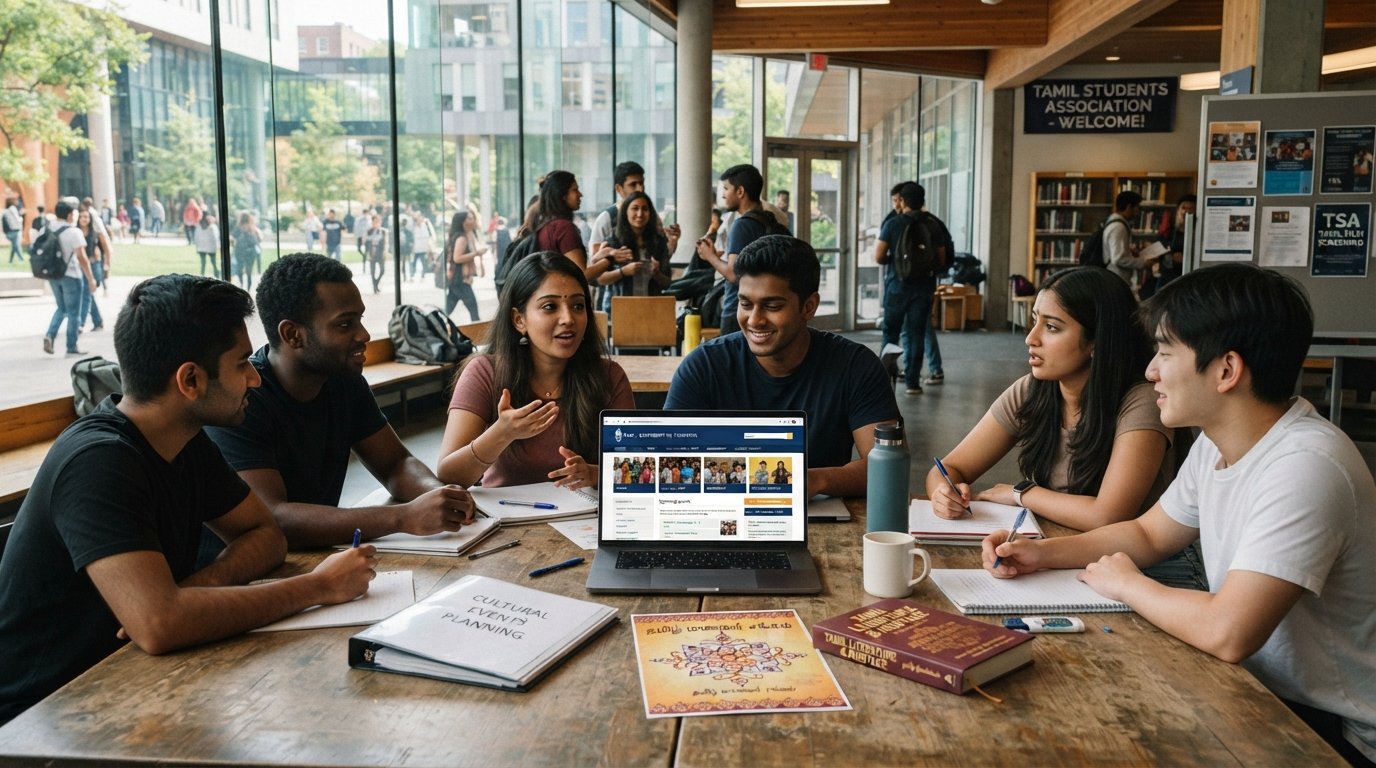
A Tamil Students Association is generally a student-led university organization that brings students together around Tamil culture, language, heritage, community, and student development.
Despite the singular-sounding name, there is not one worldwide Tamil Students Association. Universities in different countries have their own independent organizations, often using names such as Tamil Students Association, Tamil Students’ Association, Tamil Student Society, or Tamil Student Union.
These groups can organize cultural celebrations, social events, academic activities, professional networking, volunteering, and leadership opportunities. The exact activities and membership rules depend on the university.
What Is a Tamil Students Association?
A Tamil Students Association, commonly abbreviated as TSA, is a campus organization created to support and connect students interested in Tamil culture, heritage, language, community, or identity.
Its purpose can differ from one university to another. Some organizations focus primarily on cultural events and social activities, while others also provide professional development, academic support, community service, and leadership opportunities.
For example, the University of Toronto’s UTSG Tamil Students’ Association describes activities covering Tamil culture, community building, professional development, health and wellness, and student engagement. Its documented programming has included orientation, Thai Pongal celebrations, and professional networking.
The important point is that a Tamil Students Association is usually a university-specific student organization, rather than a single international organization with branches everywhere.
Is There One Tamil Students Association Worldwide?
No.
The name is used by independent student organizations at universities in different countries.
For example, the University of Toronto has Tamil Students’ Association organizations connected with different campuses, while Toronto Metropolitan University has its own Tamil Students Association. The University of Kelaniya in Sri Lanka also has a separate Tamil Students’ Association with its own committee and activities.
These organizations may share similar goals, but they are not necessarily governed by the same leadership or constitution.
This distinction matters when searching for membership information. A student should look for the association connected specifically to their university.
What Is the Purpose of a Tamil Students Association?
The central purpose is usually to create a community where students can connect with Tamil culture and with one another while participating in university life.
Common objectives include:
- Promoting Tamil culture and heritage
- Creating a welcoming student community
- Organizing cultural and social events
- Encouraging language and cultural learning
- Supporting academic development
- Creating professional networking opportunities
- Encouraging volunteering and community service
- Developing student leadership
- Connecting students with alumni and professionals
Not every association provides all of these services. Its constitution, university policies, student leadership, and available resources determine what it can offer.
What Activities Do Tamil Students Associations Organize?
Activities vary considerably between campuses, but several categories appear frequently.
Cultural Festivals and Celebrations
Cultural events are often one of the most visible parts of a Tamil student association.
Programs may include:
- Thai Pongal celebrations
- Tamil New Year events
- Cultural showcases
- Traditional music
- Dance performances
- Food events
- Fashion or cultural exhibitions
- Heritage presentations
- Tamil arts programs
For example, UTSG TSA documented a Thai Pongal celebration featuring traditional food, kolam, a Pongal preparation demonstration, and student-led dance and music performances.
These events can introduce Tamil traditions to students who may not already be familiar with them.
Tamil Language and Heritage Programs
Some associations also create opportunities to learn about Tamil language, history, literature, traditions, and heritage.
Possible activities include:
- Language sessions
- Cultural workshops
- Heritage talks
- Literature-related projects
- Student publications
- Discussions about Tamil history
- Cultural education programs
The University of Kelaniya’s Tamil Students’ Association describes its work as promoting Tamil culture, language, and heritage alongside educational and social initiatives.
Social and Recreational Events
Student associations are also social communities.
A TSA may organize:
- Welcome events
- Mixers
- Games
- Sports activities
- Movie nights
- Dinner events
- Networking socials
- Campus meetups
These activities can be particularly useful for first-year students or students who are new to a university.
Current TMU TSA resources, for example, list mixers, sports events, cultural activities, and other student programs.
Do Tamil Students Associations Provide Academic Support?
Some do.
Academic support can take several forms, depending on the university and the association’s resources.
Examples include:
- Study groups
- Mentoring
- Academic workshops
- Alumni discussions
- Information-sharing sessions
- Scholarship information
- Guidance from senior students
The University of Kelaniya’s TSA describes educational development as part of its activities and lists scholarships, training programs, career guidance, and employment advice among its initiatives.
However, students should check their individual association’s current programs rather than assuming that every TSA offers formal academic services.
Can a Tamil Students Association Help With Career Development?
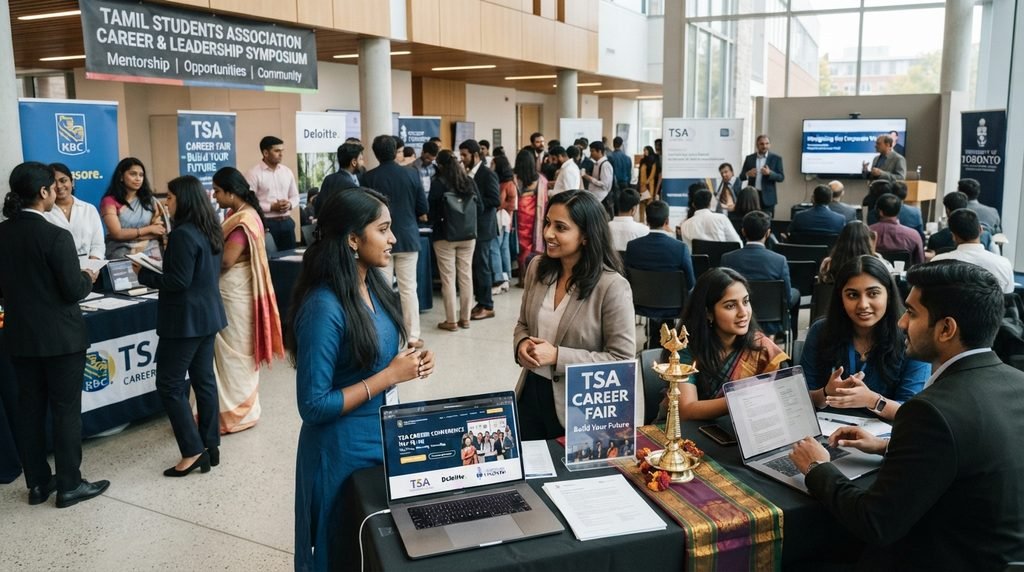
Yes, some associations include professional development in their programming.
A student organization can create opportunities to:
- Meet professionals
- Attend career panels
- Learn about different industries
- Connect with alumni
- Practice networking
- Receive resume feedback
- Explore mentorship
- Learn about internships and careers
UTSG TSA’s documented Professional Networking Night included industry speakers from fields such as healthcare, technology, law, and finance, along with networking and resume-feedback opportunities.
This shows how a cultural student organization can also become a professional networking community.
Who Can Join a Tamil Students Association?
Membership rules vary by university.
Many organizations are designed primarily for students with Tamil cultural, linguistic, or heritage connections, but some also welcome students who are interested in Tamil culture.
For example, the University of Toronto’s student-organization directory describes its UTSG Tamil Students’ Association as a forum for Tamil students as well as students affiliated with the Tamil language, culture, or people.
Other associations may have different eligibility requirements.
Before joining, check the organization’s:
- Membership page
- University club listing
- Constitution
- Registration form
- Social media accounts
- Student-union information
Are Tamil Students Associations Only for Tamil Students?
Not necessarily.
Many associations aim to serve Tamil students while also creating opportunities for other students to learn about Tamil culture.
The exact approach depends on the organization.
Some may be primarily identity-based, while others explicitly welcome anyone interested in Tamil language and culture.
This is another reason to check the specific university association instead of assuming that every organization follows the same membership policy.
What Are the Benefits of Joining a Tamil Students Association?
Joining can provide benefits that go beyond attending cultural celebrations.
Community and Belonging
Students can meet people with similar cultural or linguistic backgrounds and build friendships on campus.
This can be especially valuable for students who have moved away from home or are studying in another country.
Cultural Connection
Students can participate in traditions, celebrations, language-related activities, and cultural programs.
Networking
Associations may introduce students to alumni, professionals, and other university communities.
Leadership Experience
Executive positions can provide practical experience in:
- Event planning
- Team management
- Communication
- Budgeting
- Marketing
- Sponsorship
- Project coordination
A current University of Kelaniya committee profile, for example, describes student involvement in planning cultural and academic events and developing leadership, communication, teamwork, and event-management skills.
Community Service
Some organizations support charitable initiatives, fundraising, volunteering, or outreach programs.
Personal Development
Running events and working with other students can help develop confidence, organization, communication, and problem-solving skills.
How Are Tamil Students Associations Usually Organized?
The internal structure depends on the university, but many student organizations operate through an executive committee.
Typical positions can include:
- President
- Vice President
- Secretary
- Treasurer
- Events or Social Director
- Communications or Media Director
- Cultural Director
- Academic or Professional Development Director
The University of Kelaniya’s published committee information, for example, includes roles such as president, vice president, secretary, treasurer, assistant secretary, media head, and magazine editor.
The exact titles and responsibilities vary.
An executive committee generally handles planning, communication, finances, events, volunteers, university coordination, and the association’s annual activities.
What Skills Can Students Gain From Executive Roles?
A leadership role can provide experience that is difficult to obtain through classroom work alone.
Depending on the position, students may develop skills in:
- Public speaking
- Event management
- Project planning
- Budget management
- Social media management
- Sponsorship outreach
- Team leadership
- Negotiation
- Written communication
- Problem solving
- Time management
For example, organizing a large cultural event can require venue coordination, promotion, registration, budgeting, volunteers, performers, sponsors, and post-event follow-up.
That makes student-association work relevant to both campus life and future employment.
How Do You Find a Tamil Students Association at Your University?
The easiest approach is to search your university’s official student-organization directory.
Try searches such as:
“[University Name] Tamil Students Association”
or
“[University Name] Tamil student society.”
You can also check:
- Your student union website
- University club directories
- Student-life pages
- Instagram and other social accounts
- Campus event calendars
- Student orientation materials
Some associations also use dedicated application pages or social-media hubs. For example, UTSG TSA currently provides general-member and executive-application information online, while TMU TSA provides member-application and event resources through its online hub.
How Do You Join a Tamil Students Association?
The process is usually straightforward, but it differs by campus.
A typical process looks like this:
- Find the association through your university.
- Read its membership requirements.
- Complete the membership or general-member form.
- Follow its official social channels.
- Attend an introductory or cultural event.
- Participate in activities that interest you.
- Apply for executive positions if you want a leadership role.
Some universities may require students to be registered with the student union before joining a club.
Others may have separate membership forms.
How Can You Start a Tamil Students Association?
If your university does not already have one, students may be able to create a new organization.
The exact procedure depends on university policy, but the process often involves:
1. Find Interested Students
Build a small group of students who want to establish the association.
2. Define the Purpose
Create a clear mission covering areas such as Tamil culture, community, student development, education, or social activities.
3. Choose a Leadership Team
Assign initial responsibilities such as president, secretary, and treasurer.
4. Create a Constitution
The document can define:
- Purpose
- Membership
- Elections
- Executive responsibilities
- Meetings
- Financial procedures
- Decision-making
5. Apply for University Recognition
Submit the required documents through the university or student union.
6. Plan Initial Activities
Start with manageable programs such as:
- Welcome events
- Cultural workshops
- Study sessions
- Social gatherings
- Pongal celebrations
- Networking events
7. Build an Online Presence
Create official communication channels so students can find the association easily.
The exact recognition requirements should always be obtained from the relevant university rather than copied from another campus.
Tamil Students Association vs. Tamil Society
These names can refer to very similar types of organizations.
A Tamil Students Association generally emphasizes students and campus community.
A Tamil Society may use broader cultural or social terminology.
There is no universal rule that makes one name fundamentally different from the other.
The organization’s constitution and university registration are more important than the label itself.
Examples of Tamil Students Associations
Tamil student organizations exist in several educational systems and operate independently.
The University of Toronto lists Tamil student organizations at multiple campuses.
TMU TSA currently provides student applications, social channels, and information about events such as mixers and cultural programs.
The University of Kelaniya’s association describes its work across culture, education, professional development, social initiatives, and volunteering.
These examples demonstrate why there is no single template for every Tamil Students Association.
Some may concentrate on cultural programming, while others develop extensive academic, professional, or community initiatives.
Frequently Asked Questions
1. What does Tamil Students Association mean?
Tamil Students Association generally refers to a student-led university organization that supports Tamil culture, heritage, language, community, and student activities. The exact purpose and structure depend on the individual university.
2. What does TSA stand for in Tamil student organizations?
TSA commonly stands for Tamil Students Association or Tamil Students’ Association. The abbreviation can refer to different independent organizations at different universities.
3. Can non-Tamil students join a Tamil Students Association?
Often, yes, but membership rules vary. Some associations explicitly welcome students interested in Tamil language and culture, while others may have more specific membership requirements.
4. What events do Tamil Students Associations organize?
Common activities include Pongal and Tamil New Year celebrations, cultural performances, language and heritage programs, social gatherings, networking events, academic activities, volunteering, and community initiatives.
5. How can I find a Tamil Students Association at my university?
Search your university’s official student-club directory for “Tamil Students Association,” “Tamil Students’ Association,” or “Tamil Society.” You can also check your student union, orientation materials, campus event listings, and the association’s official social-media pages.
Final Thoughts
A Tamil Students Association is more than a cultural club at many universities. It can provide a space for students to connect with Tamil heritage while developing friendships, leadership abilities, professional networks, and community involvement. Because each university operates its own organization, activities and membership rules vary. The best way to learn about a specific TSA is to check its official university listing and current student channels.
Related Post
- Newslikeyou.Com – What It Is, What It Publishes, and What Readers Should Know!
- What Is A Smart Tv Box – How It Works, Features, Benefits, and More!
- Solidarity Definition – Meaning, Examples, Synonyms, and How to Use It!
About the Author